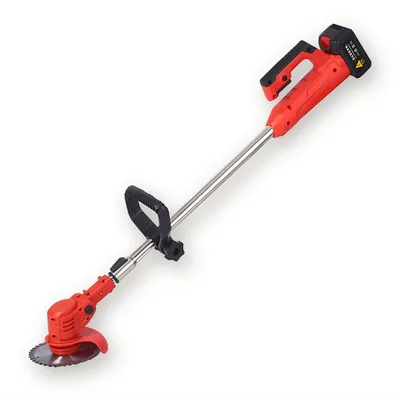
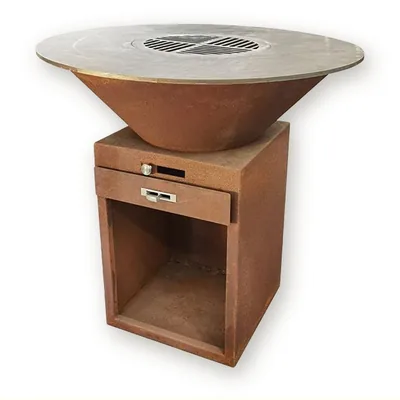
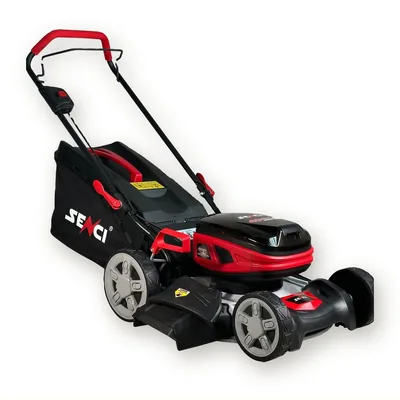
What private label means in tools and garden equipment
In private label, a partner factory produces an existing or slightly adapted model, and the product, battery and packaging carry your brand. You do not design the motor or the gearbox. You choose a proven model, specify what changes and approve the result. The level of change can be small or large:
- Logo only: your logo printed or moulded on the housing, the carton in your design.
- Colour and logo: housing, battery and accessories in your brand colours, with a matching carton and case.
- Platform range: several tools sharing one battery pack and charger under your brand, such as a drill driver, impact driver, grass trimmer and hedge trimmer.
- Adapted specification: a different battery capacity, chuck, blade length or accessory set within what the factory already makes.
Private label minimums start from 300 pieces per model. Colour changes on housings usually need a higher quantity than a printed logo, because injection moulding runs a full batch in the new colour.
Choosing the right base model
Start from the product, not the logo. Ask for samples of two or three comparable models and compare them in use:
- voltage and battery capacity in Ah, cell type and the stated number of cells;
- brushed or brushless motor, no-load speed and maximum torque for drills;
- cutting width and blade length for mowers and hedge trimmers;
- disc diameter and guard design for grinders;
- weight with battery, balance and grip;
- accessories, case and charger type.
A tool that feels right in the hand and lasts the first season builds the brand. A cheap model with a weak clutch or a loose chuck damages it, whatever the logo.
One battery platform, one decision
For a cordless range, the battery is the most important decision. Every tool you add later must use the same pack and charger, otherwise customers will not buy into the range. Choose a voltage class, agree the battery design with the factory and check that it can supply future tools on the same platform.
Do not promise compatibility with branded battery systems of other companies. Apart from the legal risk, it ties your range to someone else’s product decisions. Your platform should stand on its own name.
The documents change with the brand
When a tool carries your brand, you may be treated as its manufacturer under EU product law. The declaration of conformity, the rating plate, the manual and the GPSR information must be consistent with your name and address. Check in particular:
- CE declaration under the Machinery Directive (and from 20 January 2027 the Machinery Regulation), EMC and RoHS;
- guaranteed sound power level for mowers and trimmers under the outdoor noise Directive;
- battery information and collection marking under the Batteries Regulation, plus producer registration for batteries and WEEE in each country of sale;
- manuals and safety warnings in each language of sale;
- packaging EPR registration where you are the obligated party.
We request the manufacturer’s documents, check that they match the private label version and explain who registers what. The workflow is set out on our private label page.
Packaging and retail presentation
For garden centres and DIY stores the carton is a sales tool. Decide early whether you need:
- a full-colour retail box with product photos and key specifications;
- a tool-only version without battery and charger, alongside the kit version;
- a carry case or a blow-moulded case for drills and impact drivers;
- EAN codes and a shelf-ready outer carton;
- languages printed on the box, for example English, German and Polish.
Online sellers need different things: a strong carton that survives parcel delivery, a clear label with the EAN and images for the listing. Our page for online sellers covers this in more detail.
Garden products beyond power tools
Private label is not only for drills. Many retailers start with simpler lines where branding is easy and quantities are moderate:
- hose reels, spray guns and watering sets with a branded carton;
- pruning shears, garden saws and hand cultivators with coloured handles;
- BBQ tool sets, grill gloves and thermometers in gift packaging;
- solar path and wall lights in a printed box;
- bit and socket sets in a moulded case with your logo.
These lines carry fewer regulatory steps than battery tools and help build a recognisable brand on the shelf before a cordless platform is added.
The approval sequence
- Choose base models from samples, about 7–14 days for delivery.
- Send logo, colours and packaging brief.
- Approve artwork for housing, carton, manual and labels.
- Approve the pre-production sample in your colours.
- Pay the deposit, typically 30–50 %, and confirm the production slot.
- Pre-shipment inspection against the approved sample.
From order to warehouse, plan on about 8–12 weeks. For a spring launch, that means approving the pre-production sample in October–November, before the factory holidays in late January–February.
Pricing and margin
Private label prices are built from the base model, the changes you ask for and the quantity. A printed logo adds little to the unit cost. New housing colours, a dedicated case or a full-colour retail box add more, and tooling for a new mould is usually a one-off charge. Ask for the price at two or three quantity levels, so you can see where the steps are.
Compare the delivered cost per unit with the shelf price you plan. Include freight, duty, import VAT if you cannot reclaim it immediately, registration fees for WEEE, batteries and packaging, and a reserve for warranty returns. A private label tool that looks cheap ex-factory can lose its margin once these are added. We quote private label ranges delivered, so the comparison is direct; see our pricing page for how the offer is built.
Common mistakes
- Approving artwork before the product specification is fixed.
- Choosing a battery that the factory will not use in future tools.
- Ordering one colour per model when the range should look like one family.
- Leaving manual translations to the last week.
- Starting with ten private label models instead of three that sell.
If you are building a range for a store group, our page for garden and tool brands explains OEM and ODM work in more depth.